“WHEN PEOPLE-PLEASERS STOP PLEASING PEOPLE, PEOPLE AREN’T PLEASED.” *
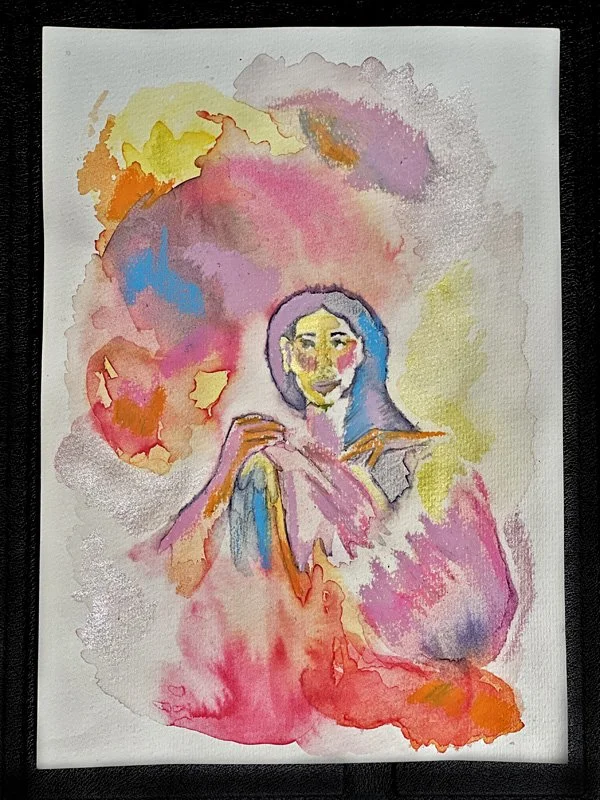
The topic of people-pleasing has been all over my algorithms recently. Before this became a common phrase and spread all over the internet, podcasts, songs, etc., I learned about it from a program designed to unlearn and relearn the healthy way. I love being part of a program that helps me unpack the oh-so-many ways unhealthy patterns show up—and to practice handling them differently. I am not alone. Millions of people struggle with the same things. Generations before us were taught that putting others first was the way to be a good person, and that putting ourselves first was selfish. We weren't taught that our needs matter, too—that healthy relationships require us to care for ourselves as well as others. We weren't taught that our needs carry equal weight. I didn’t learn about boundaries- what they are and what they are not (both very important)- until I got into this program in my 30’s.*
I get support in making changes in myself whenever I need it, with encouragement and cheerleaders, even when I am (gasp!) disappointing people I love. I don’t mean to make light of this. It is very hard for many of us, and it can cause pain in our family systems. But we don't have to navigate those changes alone. Learning to consider ourselves too is new (well, to some of us). It is not selfish. It is loving and healthy.
Applying new principles* in everyday life is very different from knowing it intellectually. Practicing is different from knowing. I would not be able to do this by reading something (or many things), listening to a podcast, or seeing a meme online. The examples shared by many others applying this new way of “doing life” are key. “The healing is in the hearing”. * Slogans give me something to hold onto when the guilt kicks in—when I'm doing things differently and shifting these dynamics. They're easy to remember, and they can interrupt my default thinking long enough for me to choose something healthier. They're not inspirational or clichéd fluff. They're tools. By consistently immersing myself in this new way of thinking, healthier responses eventually become more familiar—and sometimes even become my default. It also helps to visualize the people who share these tools. I feel supported, and that I am not alone in this. A sense of belonging. It took time, and I still often need help. Reading about this or seeing a meme doesn't hold my hand while I actually practice this new way of doing things and other people respond poorly. The reactions are tough.
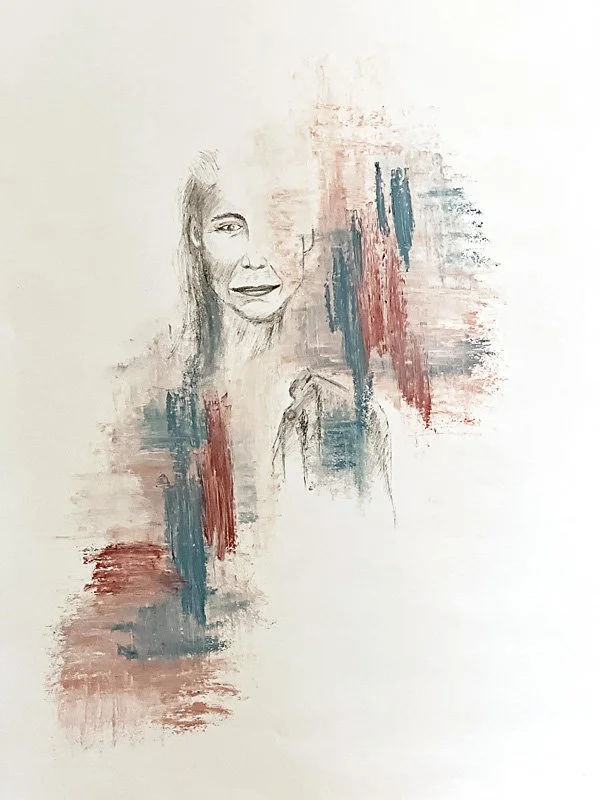
This can be extremely difficult in neurodiverse families, where people think differently, perceive things differently, communicate differently, miss implied meanings, miss the emotional or social intel underneath, or assign meaning that isn't intended. Many of the people I love don't necessarily understand what I'm experiencing. Some don't ask questions about me or my life. Some have ASD, ADHD, extreme black and white thinking, extreme anxiety, unworked trauma, or a million tabs open in their heads. What looks like a lack of empathy or understanding is usually something else entirely. Lots of different “isms” moving among us. But regardless of why they don't understand, they don't have all the information I have about my own life. Other people cannot advocate for my needs. I am the one who advocates for my needs. I am the one who is responsible for enforcing my boundaries.
The black and white thinking still takes the lead for the hardest to deal with. “Conversations” feel like an insanity cycle when you’re in it. Saying no because of a particular reason (schedule, bad timing) becomes “they don’t want to help ever,” “they don’t believe in helping family”… to where the requests stop altogether. It is hard to get the meaning across when everything gets interpreted in absolutes.
It is not my responsibility to emotionally regulate everyone else. They can have a hard time with my “no”. They can have their reaction. They can be disappointed. But if I’m having a hard time with my “no”, because of their reactions, then that is work I still have to do within myself.
I have realized that many of my choices in life, big and small, focused on others instead of what was best for me, and later, my own tiny family. My hubby has gone through this as well. Learning to make decisions differently—to consider ourselves— has been essential to our relationship and to our individual health. I think about what happens when we teach this to the next generation, rather than passing the old pattern on to them. “Shame-based anxious adults raise shame-based anxious kids who become shame-based anxious adults and the cycle keeps repeating until we learn to move and respond differently.” *
This broken down form hangs on my wall in my office. It actually came from someone else’s sponsor and was shared in experience, strength, and hope:
(When making decisions regarding family, friends, work, anything) Consider the following:
Can they do it for themselves?
Is it my responsibility?
Is it sustainable?
Do I have the capacity?
A. Time
B. Money
C. Emotionally
D. Mentally
E. PhysicallyF. Energy
5. Do I want to do it?
If I answer no to any of the above, then…
6. What is my motivation?
A. Caretaking
B. Manipulation
C. Control
D. Forcing a solution
E. Fear
F. Proving
G. External validation
Then I may be slipping into codependent behavior. I can evaluate how to proceed—whether that means stopping the enabling behavior or continuing, with the understanding that it is my choice if I feel resentful about it later.
______________________________________________________________________
Resentment. I am the one who said yes. If I need to say no, it is my responsibility to say no. If I say yes when I really mean no, the resentment will be on me.
______________________________________________________________________
“Love does not have strings attached.”
“For fun and for free” – I have to want to do whatever the thing is.
“We are human beings, not human doings.”
“Give from my essence, not from my excess.”
______________________________________________________________________
But what about the guilt that comes with that little word, “no”? I've heard it said many times: “The guilt you feel when you disappoint others can be a reflection of having learned, somewhere along the way, that your own needs didn't matter as much.” And “The people having trouble with your boundaries are the ones who benefitted from you having none.” Again, I am the one who has to advocate for myself, because I am the one with the information needed to make this decision. Which means, I have to speak up. “Participation is the key to harmony.” * This statement is Concept Four in many 12 step programs for a reason.
In moving and “doing life” differently in this way, I have learned that I need to go through a process of forgiving myself sometimes for enabling the behavior for so long. You know that behavior where other people's expectations of you are pretty damn lopsided? Where the relationship feels one-sided? Where there isn't much reciprocation? Those. Where your needs weren't met for so long, you did all the work in the relationship, and you let go of so many things that now that behavior is what they continually expect from you? Yeah. That. It’s an uncomfortable phase to be in. The shift. But being uncomfortable is still manageable. And it is the only way to shift into something better. “Nothing changes if nothing changes.” *
_____________________________________________________________________
“If you don’t want to be a doormat, get off the floor.” *
“When people pleasers stop pleasing people, people aren’t pleased.” *
_____________________________________________________________________
I will say that sometimes I still need permission. Yes, that is frustrating as hell, but it still is so. I need encouragement from people who understand this difficult dynamic, because this is not my default programming. Keep the peace, make everyone happy so that I can be happy (when deep, deep into the onion I wasn’t happy with abandoning myself, my needs, my voice, my perspective, different choices available…) This is the epitome of codependence issues for me. Being the martyr and lighting myself on fire to keep others warm (in the figurative sense. With my schedule, my mental and emotional load, causing burnout and physical repercussions). I would over give or do the lopsided thing because it was easier for them– definitely not for me.
And then there is the other half of saying no: learning to live with the other person's reaction. That is where Detaching With Love* comes in. This one is huge for me, and the hardest concept for me to do automatically. I still need help and I’m grateful for the millions of people in this program across the world standing by 24/7 to reason it out with me, and “help me read the label when I am inside the bottle” and can’t see clearly. Detaching from other people’s reactions and not absorbing their “stuff.” Sometimes I need to step back from the intensity of my feelings without judging or acting on them. I can accept that I'm feeling what I'm feeling without letting those feelings make the decision for me.
Frustration with emotional immaturity and poor reactions bubbles and fires in my chest. Egh. In regard to not getting my way all the time, and letting go of “my self will running riot,” I would say others’ reactions are part of my own expectations and the problem that comes with that.
The idea that including yourself in your own decisions is “selfish” can be hard for people who haven't learned to think this way. Even considering our own needs can feel wrong. So, their reaction to “no” is because they are not getting their way? So when someone reacts badly to my “no,” is it because they believe their needs are more important than mine? How selfish is that?? What kind of logic is that? I have thought this many times, my sponsor reiterates that to me as well. We also share tools to cope with the fallout and change our thinking – away from the dreaded blame-shame-game, manipulation, control, and whatever else people are going to throw at us….

Healthy relationships aren't supposed to be me vs. everyone else. They're supposed to have room for me, too.
“When people pleasers stop pleasing people, people aren’t pleased.” “When you get healthier, people are not going to like it.” * These sayings help me accept other people's reactions. I have the tools to deal with the fallout.
I can be proud of myself for saying no, even though other people are not.
Even when it means dealing with unacceptable behavior.
Even when it is writing this essay and putting it out there. To be able to detach from others’ reactions.
Even when this topic is all over the place now. Joining in on the conversation. Because coping skills, emotional intelligence, and emotional maturity are still not being taught in schools, we can do our best to keep it moving forward and make sure the next generation learns this.
It is empowering.
It feels good to have a voice.
And look at that.
Things can shift and move differently today.
**Original artwork by author Lisa Shaw McKenzie. © 2026. All rights reserved. Cheshire Moon Smile.
*Sources & Notes:
Slogans and quotations marked with an asterisk are attributed to Al-Anon Family Groups. They are commonly used language throughout the fellowship. Some have been paraphrased or adapted in the context of my own writing. For more information, please visit alanon.org or coda.org.